논문 링크:
Cognitive Semantic Communication Systems Driven by Knowledge Graph
Semantic communication is envisioned as a promising technique to break through the Shannon limit. However, the existing semantic communication frameworks do not involve inference and error correction, which limits the achievable performance. In this paper,
arxiv.org
출처: F. Zhou, Y. Li, X. Zhang, Q. Wu, X. Lei, and R. Q. Hu, “Cognitive semantic communication systems driven by knowledge graph,” arXiv preprint arXiv:2202.11958, Feb. 2022.
GitHub 링크:
GitHub - eunc812/Cognitive-Semantic-Communication-Systems-Driven-by-Knowledge-Graph-Implementation: Implementation of Cognitive
Implementation of Cognitive Semantic Communication Systems Driven by Knowledge Graph - eunc812/Cognitive-Semantic-Communication-Systems-Driven-by-Knowledge-Graph-Implementation
github.com
Colab 링크:
Cognitive Semantic Communication Systems Driven by Knowledge Graph (full notebook)
Colab notebook
colab.research.google.com
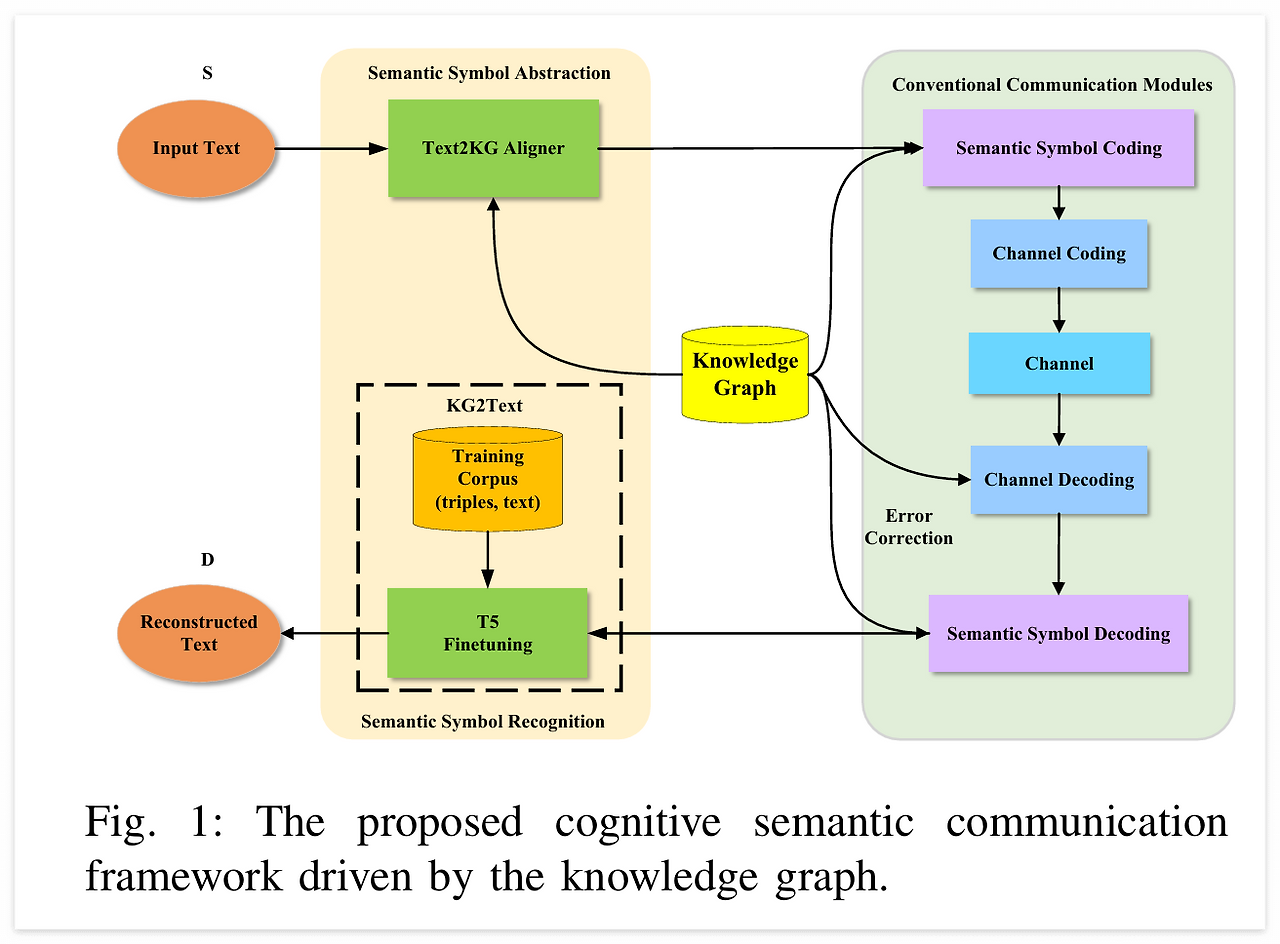
아래 그림과 같이 지식 그래프를 기반으로 하는 텍스트 전송 모델을 구현했다. 크게 다음과 같이 구현을 진행했다.
A. Knowledge Graph: WebNLG 불러온 후, Text2KG alignment 알고리즘 통해 데이터 정렬
B. Semantic Symbol Abstraction: 텍스트 문장을 head, relation, tail triplet 쌍으로 정렬
C. Conventional Communication Modules
- semantic symbol coding: 정렬된 [h, r, t] 쌍을 정수 id로 변환
- channel coding, channel, channel decoding: semantic symbol들을 비트열로 전송, BSC 채널에서의 비트 오류
- semantic symbol decoding: KG를 통해 해밍거리가 가장 짧은 심볼로 정정
D. Semantic Symbol Recognition: T5 모델 학습, 학습한 모델에 기반해 KG2Text 수행, 텍스트 문장 수정
E. Evaluation
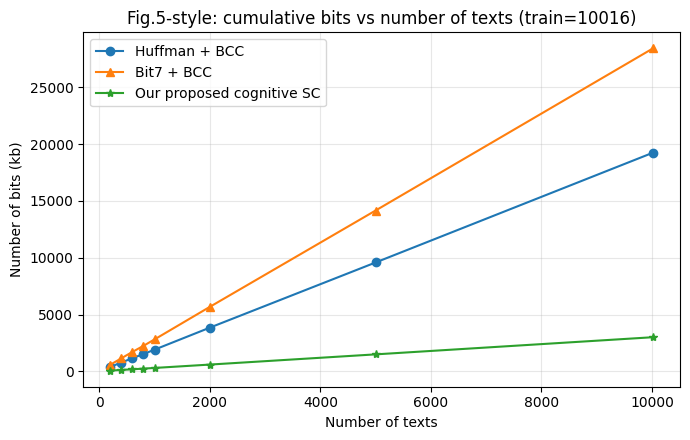
- Fig.4 + Fig.5: semantic compression comparison
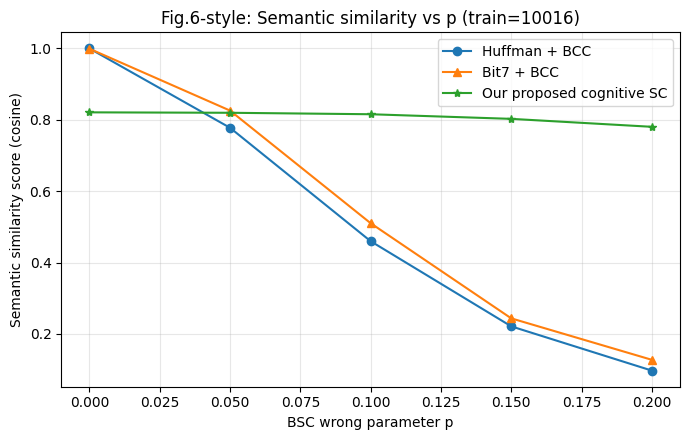
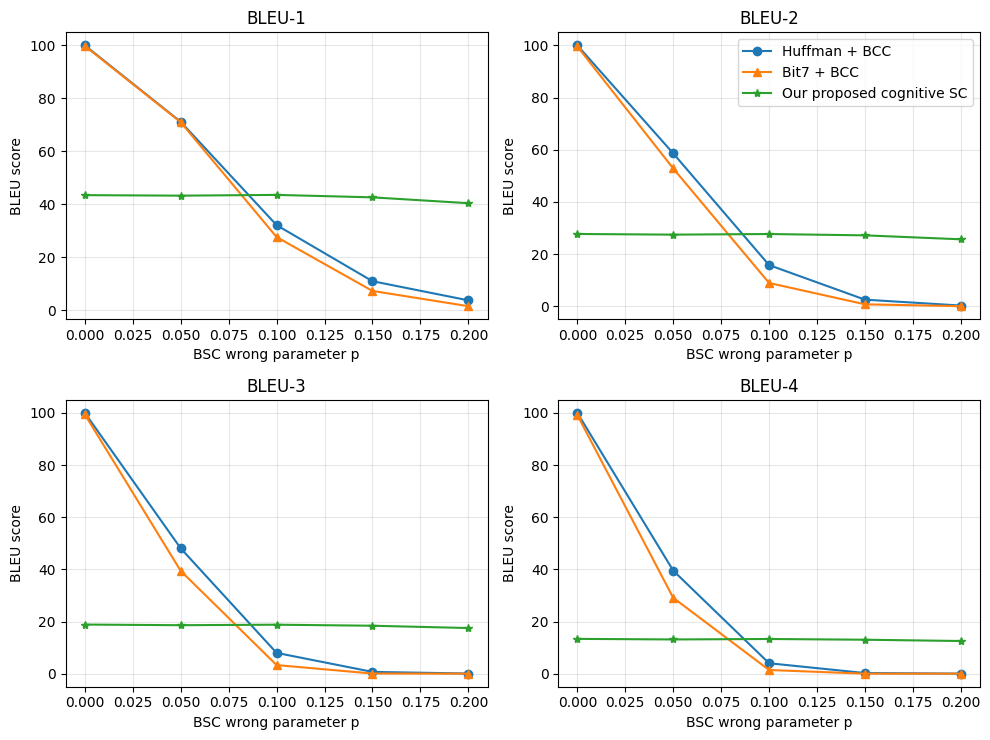
- Fig.6 + Fig.7 semantic similarity score, BLEU score
전체 구조도
semantic compression comparison

semantic similarity score, BLEU score